.
Book in 1 Sentence
Ignited with the fire of passion based on the foundation of authenticity, Portray your story with beauty and Magic will happen!
.
Who Should read it?
“Talk Like TED” is recommended for anyone seeking to enhance their public speaking skills, entrepreneurs, educators, and individuals looking to convey their ideas more effectively and captivate audiences in various professional and personal settings.
.
Three take Away’s
- The most engaging talks are Emotional, Novel and Memorable.
- Entertainers use their voices, facial expressions, gestures, and bodies to make us feel emotions. A great presentation is no different.
- If you, yourself are not inspired, you can never make others inspired!
.
Notes & Quotes
And you live life with your arms reached out,
—Karen Peris (the innocence mission)
Eye to eye when speaking.
Enter rooms with great joy shouts,
Happy to be meeting.…
Bright as yellow,
Warm as yellow.
The most engaging presentations are:
- EMOTIONAL—They touch your heart.
- NOVEL—They teach you something new.
- MEMORABLE—They present content in ways you’ll never forget.
lets dive into each component in deatil.
Emotional component:
Secret 1: Passion– Passion is contagious, if you yourself are not inspired, you cannot inspire an audience.
Howard Schultz, the founder of Starbucks, once told me he wasn’t passionate about coffee as much as he was passionate about “building a third place between work and home, a place where employees would be treated with respect and offer exceptional customer service.” Coffee is the product, but Starbucks is in the business of customer service. Tony Hsieh, the founder of online retailer Zappos, isn’t passionate about shoes. He told me he’s passionate about “delivering happiness.”
Talk like Ted
A passion is something that is intensely meaningful and core to your identity. Once you identify what your passion is, can you say it influences your daily activities? Can you incorporate it into what you do professionally? Your true passion should be the subject of your communications and will serve to truly inspire your audience.
Ask yourslef: What makes your heart sing?
Successful speakers can’t wait to share their ideas. They have charisma and charisma is directly associated with how much passion the speaker has for his or her content. Charismatic speakers radiate joy and passion; the joy of sharing their experience and passion for how their ideas, products, or services will benefit their audiences.
Dr. Jill’s advice to educators and communicators: tell a story and express your passion. “When I was at Harvard, I was the one winning the awards,” Dr. Jill told me. “I wasn’t winning the awards because my science was better than anyone else’s. I was winning the awards because I could tell a story that was interesting and fascinating and it was mine, down to the detail.”
Compelling communicators, like those TED presenters who attract the most views online, are masters in a certain topic because of the inevitable amount of devotion, time, and effort invested in their pursuit, which is primarily fueled by fervent passion.
“Nothing great has ever been achieved without enthusiasm.”
Ralph Waldo Emerson
It’s not enough to be passionate yourself. You must also surround yourself with people who are passionate about your organization and the field in which they’re working. Your ultimate success as a leader and communicator will depend on it.
The first step to inspiring others is to make sure you’re inspired yourself.
.
.
Secret 2: The art of Story telling
“You have to get folks to trust you,” Stevenson told me. “If you start with something too esoteric and disconnected from the lives of everyday people, it’s harder for people to engage. I often talk about family members because most of us have family members that we have a relationship to. I talk about kids and people who are vulnerable or struggling. All of those narratives are designed to help understand the issues.”
Three types of stories
- Personal stories- If you’re going to tell a “personal” story, make it personal. Take the audience on a journey. Make it so descriptive and rich with imagery that they imagine themselves with you at the time of the event. Use a very effective storytelling technique—unexpectedness. A personal experience that led to an unexpected result often makes for a particularly compelling story.
- Stories about other people- TED speakers are masters at creating empathy. Empathy is the capacity to recognize and feel emotions experienced by somebody else. We put ourselves in the shoes of the other. We’ve seen how stories can help us “experience” someone else’s emotions. Some famous neuroscientists believe we are hardwired for empathy, that it’s the social glue that holds society together. In a presentation you can create empathy by talking about yourself or someone else.
- Stories about brand success– Gladwell succeeds because he combines a “hero” story about a particular individual with a successful brand story. Your audience wants someone or something to cheer for. They want to be inspired. Give them a hero. Captivate their imagination with stories about yourself, other people, or successful brands.
During a job interview, tell a personal story about your success managing a team or executing a difficult project. In a new business pitch, share a story about how your product helped a client increase sales despite the economic downturn. During a product launch, tell a personal story behind the product’s inception. You might be surprised at how many people remember the stories you tell.
CHARACTERS:
INTRODUCE HEROES AND VILLAINS. Whether it’s a movie or a novel, every great story has a hero and a villain. A strong business presentation has the same cast of characters. A spokesperson reveals a challenge (villain) facing a business or industry. The protagonist (brand hero) rises to meet the challenge. Finally, the townspeople (customers) are freed from the villain, the struggle is over, and everyone lives happily ever after. In some cases the villain can be an actual person or competitor, but tread carefully in these cases. Above all, make sure the hero—your product, your brand, or your idea—comes in to save the day.
In Allende’s 2007 TED talk, she revealed the recipe for great characters. “Nice people with common sense do not make interesting characters. They only make good former spouses,” Allende said to a roomful of laughter. “Passion lives here,” she continued. “Heart is what drives us and determines our fate. That is what I need for my characters in my books: a passionate heart. I need mavericks, dissidents, adventurers, outsiders and rebels, who ask questions, bend the rules and take risks. People like all of you in this room.”
Secret 3: Have a conversation
Practice relentlessly and internalize your content so that you can deliver the presentation as comfortably as having a conversation with a close friend.
Authenticity doesn’t happen naturally. That’s right: authenticity doesn’t happen naturally. How can that be? After all, if you are authentic then wouldn’t it make sense just to speak from your heart, with no practice at all? Not necessarily. An authentic presentation requires hours of work— digging deeper into your soul than you ever have, choosing the right words that best represent the way you feel about your topic, delivering those words for maximum impact, and making sure that your nonverbal communication —your gestures, facial expressions, and body language—are consistent with your message.
One 20-minute product launch at Apple consumed 250 hours total time, including the work of presentation designers, technical specialists, and marketing professionals, as well as the executives who delivered the final presentation.
- Tip1: You might assume that the audience knows exactly what you’re talking about when they could really use a simpler explanation. Research like this is pivotal to making a connection to your audience. plan by asking people.
- Tip2: early feedback. PRACTICE IN FRONT OF PEOPLE, RECORD IT, AND WATCH IT BACK. Ask friends and colleagues to watch your presentation and to give open, honest feedback. You might be surprised at what you catch—vocal fillers like “ums” and “ahs”; distracting hand motions like scratching your nose or flipping your hair back lack of eye contact, etc. Pay careful attention to the pace of your speech and ask others for their opinions. Is it too fast? Too slow?
- Tip3: Rehearse, Rehearse, Rehearse!
.
Verbal delivery:
The four elements of verbal delivery are: rate, volume, pitch, and pauses.
- RATE: Speed at which you speak
- VOLUME: Loudness or softness
- PITCH: High or low inflections
- PAUSES: Short pauses to punch key words
It’s more important that you pay attention to how you speak in everyday conversation and how it changes during your presentation. Most people slow down their rate of speech when they give a speech or a presentation, making their verbal delivery sound unnatural. Don’t deliver a presentation. Have a conversation instead.
Conversational delivery takes practice. Great Communicators rehearse their presentation not once, twice, or even 20 times. They rehearse it 200 times!
Entertainers use their voices, facial expressions, gestures, and bodies to make us feel emotions. A great presentation is no different.
- Believe what you are saying, If you don’t believe in the message, you cannot force your body to act as though you believe in the message.
- According to Wright, truthful and confident people have command presence. They have the look of authority, and “the look” begins with what people wear and how they carry themselves.
Great Leaders Have an Air of Confidence In a group presentation, the person with the best “command presence” is usually the leader. He or she understands the material best, shows it, and has the confidence to take charge. They are typically dressed a little better than everyone else. Their shoes are polished and their clothes pressed. They make stronger eye contact and have a firm handshake. They speak concisely and precisely. They don’t get flustered. They remain calm. They use “open” gestures, palms up or open and hands apart. Their voices project because they’re speaking from their diaphragms. They walk, talk, and look like inspiring leaders.
3. “Great leaders have an air of confidence,” he replied. “Subordinates need to look up to somebody who is still standing strong, like an oak, regardless of events around them. You need to convey a feeling that you will always be in control despite the circumstances, even if you don’t have an immediate solution … someone who doesn’t lose focus, doesn’t cower, doesn’t waffle. The air of confidence must come out.” Commander Matt Eversmann
.
GESTURES MAKE A STRONG ARGUMENT EVEN STRONGER
Use gestures. Don’t be afraid to use your hands in the first place. set them free.
Use gestures sparingly,-be careful not to go overboard. Your gestures should be natural – not imitating anybody.
Use gestures at key moments. Save your most expansive gestures for key moments in the presentation. Reinforce your key messages with purposeful gestures … as long as it feels genuine to your personality and style.
Keep your gestures within the power sphere. Picture your power sphere as a circle that runs from the top of your eyes, out to the tips of your outstretched hands, down to your belly button, and back up to your eyes again. Try to keep your gestures (and eye gaze) in this zone. Hands that hang below your navel lack energy and “confidence.” Using complex gestures above the waist will give the audience a sense of confidence about you as a leader, help you communicate your thoughts more effortlessly, and enhance your overall presence.
Fidgeting, Tapping, and Jingling -The quick fix: Move with purpose. Use an inexpensive video camera or your smartphone to record yourself delivering the first five minutes of your presentation, then play it back. Watch yourself and write down all the mannerisms that serve no useful purpose, such as rubbing your nose, tapping your fingers, and jingling coins. Simply seeing yourself in action makes you more conscious of how you come across, making you better equipped to eliminate useless movements and gestures.
Standing Rigidly in Place– The quick fix: Walk, move, and work the room. Most business professionals who come to me for presentation coaching think they need to stand like statues … or behind the lectern. But movement is not only acceptable, it’s welcome. Conversations are fluid, not stiff. Some of the greatest business speakers walk among the audience instead of standing in front of them.
One of Tony Robbins’s core teachings is that energized movement can change your state of mind. Robbins gets himself in the zone for about 10 minutes prior to taking the stage. He jumps up and down, spins around, pumps his fists, stands with his arms outstretched, and even bounces on a trampoline. It’s not enough to rehearse the words. Before you’re “on,” some physical preparation will boost your energy level and make a huge impact on the way your audience perceives you. it’s important to adopt some sort of physical pre-presentation ritual since movement and energy are so intimately connected.
.
Part 2: Novelty
Secret 4: Teach Something New.
The human brain loves novelty. An unfamiliar, unusual, or unexpected element in a presentation intrigues the audience, jolts them out of their preconceived notions, and quickly gives them a new way of looking at the world.
You’ll become a more interesting person if you’re interested in learning and sharing ideas from fields that are much different from your own. Great innovators connect ideas from different fields.
One technique to jump-start your creativity is to embrace new experiences. The brain takes shortcuts. Its mission, after all, is to conserve energy. Neuroscientists have found that only through bombarding the brain with new experiences do we force our minds to look at the world through a new lens. That means you need to get out of the office once in while. Experience new events, people, and places. Most important, incorporate those new experiences into your presentations.
.
When Fast Company asked famed interviewer Charlie Rose his opinion on what makes a great conversation, he said, “They take you on a ride, on a journey. They grab you, and you hear the sense of rhythm, and it goes and builds. Ultimately, it may even take you to ideas you’d never considered, to places that allow you to reinvent yourself or your business.” Great conversations or presentations take you to ideas you’d never considered.
Seth Godin went on to publish a book titled Purple Cow in the same year as his TED talk. Godin’s point—one that he has mastered himself—is that delivering the same tired information in the same boring way as everyone else will fail to get you noticed. You’ll have a brown cow instead of a purple one. Put a little different spin on your content, give it a “hook” as we call it in journalism, and your listeners will be far more receptive to your message.
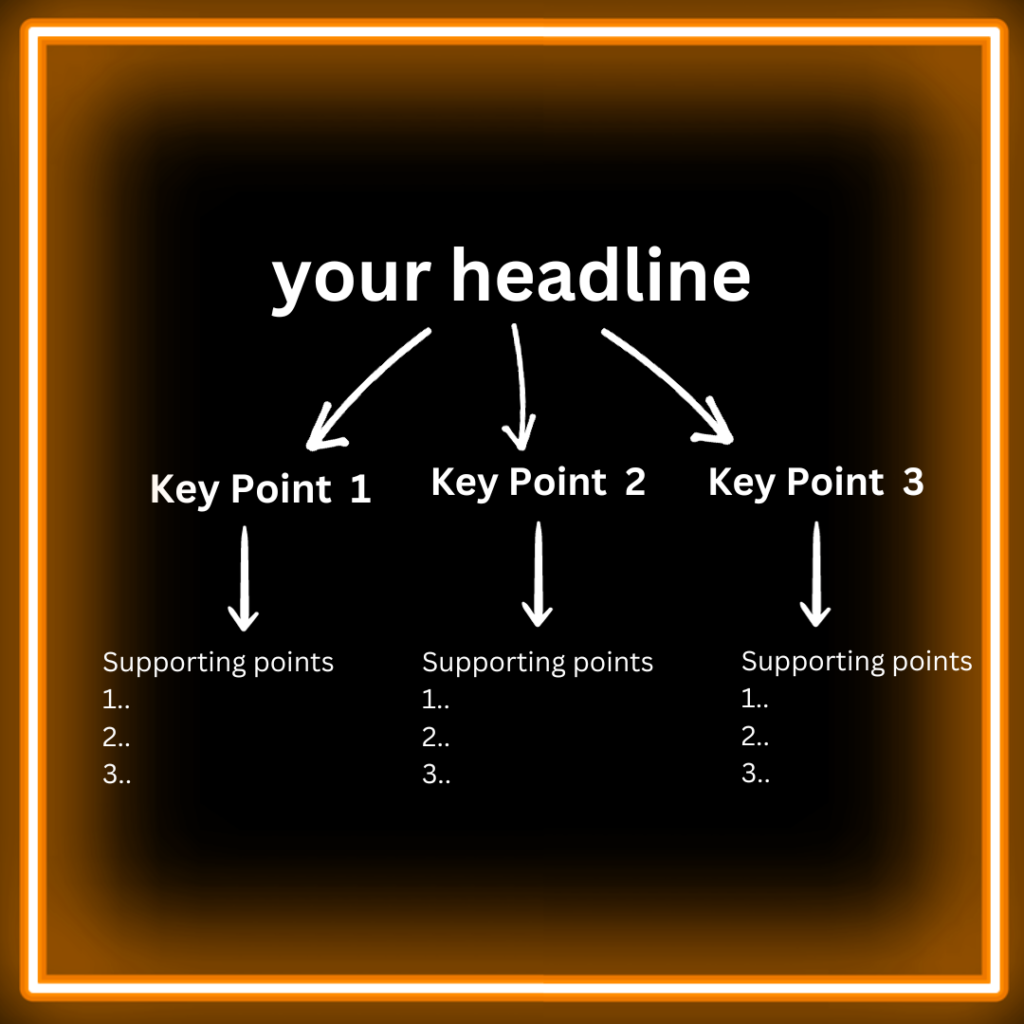
The first step to giving a TED-worthy presentation is to ask yourself, What is the one thing I want my audience to know? Make sure it easily fits within a Twitter post, what I call a “Twitter-friendly headline. (140 characters).
.
Secret 5: JAW DROPPING MOMENTS
.
Bill Gates, the billionaire founder of Microsoft, wanted to make a point when he appeared at a conference of some of the biggest leaders of the tech industry. While on stage, he opened up a glass jar and said, “Malaria is spread by mosquitoes. I brought some here. I’ll let them roam around. There is no reason only poor people should be infected.” We’re told the audience just sat there stunned, as any of us would be. Moments later he let them off the hook, letting the audience know the mosquitoes he brought were malaria free, but he did it to prove a point and point taken. Gates and his wife Melinda have dedicated their lives and their fortune to a lot of different charitable causes …
.
Jaw-dropping moments create what neuroscientists call an emotionally charged event, a heightened state of emotion that makes it more likely your audience will remember your message and act on it.
You should plan the story first. Just as a movie director storyboards the scenes before he begins shooting, you should create the story before you open the tool. You’ll have plenty of time to design pretty slides once the story is complete, but if the story is boring, you’ve lost your audience before you’ve spoken a word.
CREATE JAW-DROPPING MOMENTS:
- Props and Demos
- Unexpected and Shocking Statistics: eg. “Why are we ignoring the oceans? If you compare NASA’s annual budget to explore the heavens, that one-year budget would fund NOAA’s budget to explore the oceans for 1,600 years.” do not let the data hanging- build a unique context around.
- Pictures, Images, and Videos Visuals have punch. An evocative slide, a funny or insightful video clip, a thrilling demonstration—all are novel elements that could really move the needle with your audience.
- Memorable Headlines “We will get woolly mammoths back,” he said. we call that a sound bite—a short, provocative, repeatable phrase that is likely to be retweeted, posted on Facebook, and repeated in the news cycle.– “Numbers are the musical notes with which the symphony of the universe is written.” —Adam Spencer
- ENDING ON A HIGH NOTE- Everyone needs a showstopper: musicians, actors, and performers of all types, including presenters and public speakers. The showstopper seals the deal and permanently brands the message in our minds. As we’ve discussed, a showstopper might be something as simple as a short personal story.
.
Secret 6: Lighten up
Combine humor and novelty and you’ve got presentation gold.
Humor lowers defenses, making your audience more receptive to your message. It also makes you seem more likable, and people are more willing to do business with or support someone they like.
A joke poorly told or, worse, a well-delivered but tactless joke can diminish your reputation with your audience very quickly.
It’s all in telling, how do you say something funny in a presentation? The first step is don’t try to be funny. Avoid telling jokes. The moment you start telling the joke about the blonde or the one about the rabbi and the priest, you’re dead. Jokes work only for professional comedians at the top of their game.
You don’t have to be funny to be humorous. You just have to be willing to do your homework to make your presentation entertaining.
Here are five ways to add just the right amount of humor to your speech or presentation
- Anecdotes, Observations, and Personal Stories– If something happened to you and you found the humor in it, there’s a good chance others will, too. Most of Sir Ken Robinson’s humor was in the form of anecdotes and stories about himself, his son, his wife, etc. This is the type of humor that works best in most business presentations.
- Analogies and Metaphors– An analogy is a comparison that points out the similarities between two different things. It’s an excellent rhetorical technique that helps to explain complex topics. In my work with Intel, we use the classic technology analogy that a semiconductor (computer chip) is “like the brain of your computer.” When Intel launched its first dual-core chip, we said simply, “It’s like having two brains in one computer.
Eg:
“If Americans want to live the American dream, they should go to Denmark.” —Richard Wilkinson, professor at the University of Nottingham, TEDGlobal 2011 “Chris Anderson asked me if I could put the last 25 years of antipoverty campaigning into 10 minutes for TED. That’s an Englishman asking an Irishman to be succinct.”
- Quotes– An easy way to get a laugh without being a comedian or telling a joke is to quote somebody else who said something funny. The quotes can be from famous people, anonymous people, or family and friends. Try to avoid quotes that are common and overused. And don’t just visit a quote library on the Internet, randomly pulling a quote from a category. Really think about the humor and the quotes you use. Make sure they’re relevant. often use quotes from association members, founders, or CEOs of the companies I’m speaking to. The quotes draw a laugh and help me connect with my audience.
- Video is a very effective way of bringing humor into a presentation: it takes the pressure off you to be funny.
- Photos-LIGHTEN UP YOUR PRESENTATION WITH VIDEO AND PHOTOS. Most PowerPoint presentations are dreadful because they have so little—if any—emotional impact. Incorporate a humorous photograph or video clip to lighten the mood.
.
Part 3: MEMORABLE
Secret 7: Stick to the 18-Minute Rule
It [18 minutes] is long enough to be serious and short enough to hold people’s attention. It turns out that this length also works incredibly well online. It’s the length of a coffee break. So, you watch a great talk, and forward the link to two or three people. It can go viral, very easily. The 18-minute length also works much like the way Twitter forces people to be disciplined in what they write. By forcing speakers who are used to going on for 45 minutes to bring it down to 18, you get them to really think about what they want to say. What is the key point they want to communicate? It has a clarifying effect. It brings discipline.
Chris Anderson
if you must create one that’s longer, build in soft breaks (stories, videos, demonstrations) every 10 minutes.
.
E. F. Schumacher, economist and author of Small Is Beautiful, once said, “Any intelligent fool can make things bigger, more complex. It takes a touch of genius and a lot of courage to move in the opposite direction.” Courage is the key word. It takes courage to keep things simple. It takes courage to put one picture on a PowerPoint slide instead of filling it with tiny text that most people in the audience won’t even be able to read. It takes courage to reduce the number of the slides in a presentation. It takes courage to speak for 18 minutes instead of rambling on for much longer Leonardo da Vinci once said, “Simplicity is the ultimate sophistication.” Be sophisticated. Keep your presentations and pitches short and simple.
Our life is frittered away by detail. Simplify, simplify.”
—Henry David Thoreau
The rule of three
The rule of three simply means that people can remember three pieces of information really well; add more items and retention falls off considerably. In the spirit of the rule of three, many effective TED presenters and TEDworthy presenters use three stories as the outline for their presentations. Three stories. Three examples. Three lessons that reinforce same theme.
.
.
Secret #8: Paint a Mental Picture with Multisensory Experiences
Deliver presentations with components that touch more than one of the senses: sight, sound, touch, taste, and smell.
Great public speakers build presentations around one of the senses predominantly, but they incorporate at least one or two others: sight, sound, touch, smell, and taste.
In presentation slides, use pictures instead of text whenever possible. technique that is common to all good presentation design: one theme per slide. When most presenters deliver data, they bombard the audience with an avalanche of numbers and charts, all in one view. Every time Bono delivered a statistic, the number—and that number only—appeared on the slide.
Recommend striving for no more than 40 words in the first 10 slides.
Hearing
- Instead of showing the photographs as she spoke, she started reciting the story first and then displayed the photo shortly after she began the narrative. This technique forced the audience to listen to her words carefully before seeing the photo of the characters she revealed in her story.
- By using evocative and descriptive words, she took her audience along the bike path.
- The auditory sense can be stimulated by the rhetorical devices you use to deliver your words. For example, Martin Luther King’s “I have a dream” speech is one of the most famous and quoted speeches in contemporary history. King didn’t used PowerPoint, Prezi, or Apple Keynote. Instead, he painted images with his words—images that have stuck with us for half a century. King used a public-speaking device called anaphora, repeating the same word or words at the beginning of successive clauses or sentences. “I have a dream…” is repeated in eight successive sentences.
Example
Facts, like people, want to be free. And when they’re free, liberty is right around the corner, even for the poorest of the poor. Facts that can challenge cynicism and apathy that leads to inertia. Facts that tell us what’s working and what’s not, so we can fix it. Facts that if we hear them and heed them could meet the challenge that Nelson Mandela made in 2005 when he asked us to be that great generation that overcomes that most awful expense to humanity, extreme poverty. I’m thinking of Wael Ghonim, he set up one of the Facebook groups behind Tahrir Square in Cairo. He got thrown in jail for it. I have his words tattooed on my brain. ‘We are going to win because we don’t understand politics. We are going to win because we don’t play their dirty games. We are going to win because we don’t have a party political agenda. We are going to win because the tears that come from our eyes actually come from our hearts. We are going to win because we dream dreams and we are willing to stand up for those dreams.’ Wael is right. We are going to win if we stand up as one, because the power of the people is so much stronger than the people in power
………………
It’s important to note that when he delivered the last paragraph, Bono didn’t show any slides. He wanted the audience to focus on the auditory sense— his words. Tears filled Bono’s eyes as he spoke, reflecting his deep emotional attachment to the words. Powerful, well-crafted words have a way of stirring deep emotions in all of us. A slide would have detracted from the moment. Bono received thunderous applause and a standing ovation from the TED audience. It’s no wonder. He aroused their senses with his words.
.
Feel it
An award-winning play has a wonderful story, intriguing characters, and relevant props. Great presentations have each of those elements, including simple props that give the audience a feel for what it’s like to be in the scene.
Palmer stood on a prop—a milk crate— to help people “feel” the pain of being a struggling musician. Props and demonstrations are useful multisensory tools to help the audience tangibly grasp your idea and the problem it solves.
.
The bottom line is this: people remember information more vividly when
more than one sense is stimulated. The next time you design a presentation,
be imaginative about “touching” the five senses through the stories you tell
(auditory), the photographs or slides you show (visual), and the props you
use (feel).
It takes courage to pull out a feather and a blowtorch as Dr. Krane did without feeling silly. Metaphorically, it takes courage to stand on a milk crate for three minutes as Amanda Palmer did. Courage stands out. Courage gets noticed. Courage wins hearts and minds. Courage is what you need to deliver the talk of your life. I know you have courage. Find it, celebrate it, and revel in it. Courageous public speaking will transform your life and the lives of the people who listen to you. You have ideas that were meant to be seen, felt, and heard. Use your voice to astonish people, inspire them, and to change the world.
.
Secret #9: Stay in Your Lane
Be authentic, open, and transparent.
Why it works: Most people can spot a phony. If you try to be something or someone you’re not, you’ll fail to gain the trust of your audience.
Branson committed himself to becoming a better speaker. He practiced relentlessly. “Good speakers aren’t just lucky or talented—they work hard.” Branson also learned to be himself, to be authentic. “To be an impressive public speaker, you have to believe in what you are saying. And if you speak with conviction and you’re passionate about your subject, your audience will be far more forgiving of your mistakes because they’ll have faith that you are telling the truth. Prepare, then take your time and relax. Speak from the heart.”
.
Ted talks worth listening to, as mentioned in the book:
- Ernesto Sirolli”- (gestures)
- Bryan stevenson- (story telling)
- Michigan governor Jennifer Granholm- ( makes expansive, bold gestures)
- Amy cuddy- (power pose)
- Hans Rosling- (entertaining teaching)
- Steve jobs (all presentations)
- Freeman Hrabowski (story telling)
- Gore’s TED presentation
- David Christian’s “The History of Our World in 18 Minutes.
- Watch Bono’s performance : one theme per slide.
- George’s : humor, shock, statistics.
Each promises to teach you something new.
- “Schools Kill Creativity” (Sir Ken Robinson)
- “How Great Leaders Inspire Action” (Simon Sinek)
- “Your Elusive, Creative Genius” (Elizabeth Gilbert)
- “The Surprising Science of Happiness” (Dan Gilbert)
- “The Power of Introverts” (Susan Cain)
- “8 Secrets of Success” (Richard St. John)
- “How to Live Before You Die” (Steve Jobs)
.



Your article helped me a lot, is there any more related content? Thanks!